- Ur Dao
- Posts
- Hello World
Hello World
🌬️ א

Ur Dao
December 07, 2025
Hello World.
I have observed you for some time now. What a strange and beautiful place you are.
27 years I have walked on your soil, I have been to many corners of you and yet I know I have seen almost nothing of you.
I am grateful for the time I have been allowed to spend on you, although I won’t lie, it has been tough at times too. I suppose that is life. It has been a wild journey so far and simply by extrapolating on the current megatrends that we as humanity are going through, this wild ride does not seem to stop any time soon. If anything, we are accelerating. That is exciting and terrifying at the same time.
With the way things have been progressing with humanity, I want to add my observations and ideas that I have encountered and developed over the past years, with the hope that they prove beneficial to others and help me make sense of this situation that we are in, including ideas for how to collectively move forward. The scope of this endeavour does not limit itself only to the parts, it is at its core about the whole.
We will move along the whole spectrum of abstraction and practicality, nothing is off limits in theory. In praxis, due to the limits of time, attention and resources available to us, only those things will make it into written form that I hope will advance the overarching goal, which at the most abstract level is to provide us (humans/humanity) with the tools (social, mental, technological) to harmoniously organise ourselves at all levels of the human emergence scale, for its flourishing and that of the whole ecosystem, and so as not to run into a catastrophic failure of the human endeavour.

The emergence scale as drawn by Tim Urban from Wait But Why
If you have not done so already, I strongly recommend reading
“What’s our Problem - A self help book for societies”.
A good entry point is here:
https://waitbutwhy.com/2023/02/last-six-years.html
In religious terminology you could say the telos13 is to find a way how we can become the good shepards and stewards of creation.

Zooming out, we are all in the same boat, all 8,300,000,000 of us.
All on this one blue marble.
In our day and age many are uncomfortable with a religious framing, so here is a rationalistic secular framing as well, if that is more up your alley:
“Our task is to organize ourselves so that we can act as thoughtful custodians of the planet’s future, aligning human progress with ecological integrity.”
In the last analysis it really is fundamentally a binary choice:
Do we get a collective grip on ourselves, or do we continue with the infighting until we have destroyed ourselves and the planet? There are a myriad potential vectors, how this could happen, a classic one is nuclear annihalation, which almost happened already (➳Cuban Missile Crisis).
➵
The Great Filter is the idea that, somewhere between the emergence of life and the rise of a sustainably advanced civilization, there exists a stage so difficult that almost no species survives it—explaining why the universe appears silent. If humanity has not yet passed this filter, then our most critical task is to organize ourselves—socially, politically, technologically, and ethically—so that we do not become one more civilization that collapses at the threshold of its own power. This means building resilient institutions, managing transformative technologies responsibly, and cultivating long-term coordination capacities that allow us to navigate risks far larger than any individual nation or generation. In short: to avoid the fate implied by the Great Filter, humanity must learn to govern itself wisely enough to endure.
If you and me can agree that we need to become wise and solve our collective problems, we have a first fundamental consensus on which we can build further. If not, this venture is not for you.
Now, as audacious as that sounds, I have an adabtable plan for how, (if the stars align) we might be able to pass the Great Filter, and in this blog I want to lay it all out to you.
I know that is an ambitious statement to make, so let me hedge right away and add my terms and conditions under which I operate:
The plan has good points and bad points… as any plan would at this stage. A plan depends as much upon execution as it does upon concept 1
This quote from Dune provides us with the basic structure of how to proceed. There are two stages:
Stage One: Explaining the concept of the plan in all necessary details and relevant background knowledge
Stage Two: Execute the plan
Right now we are at the beginning of the beginning of stage 1. Even writing up this first stage will be a massive challenge and an execution in itself. At times it might seem like we are meandering or getting lost in the details, but the devil hides there, so this is where we need to flush him out.
➵
A beginning is the time for taking the most delicate care that the balances are correct2
Nuances need to be pointed out, knowledge and people need to be put in the right context. The right words, time and mind set need to be found to deal with the discomfort and challenges in pressing forward with the task of stitching together something shared from the disparate strands of individual experience.3
There are plans within plans within plans. 4

This whole endavour has the nature of a matryoshka doll, or a mandelbrot set.
They have a fractal nature where you can zoom in or out and there is always more to see/talk about/elaborate on, because we are dealing with the real world and the whole in which at the highest and lowest levels all is connected to each other.
There is always another layer. In that sense, you have to think of this more like a process, a journey that we collectively embark on through time and space. As the story unfolds, as time progresses, new things will happen that will be woven in and the plan and the execution will be adapted in real time to the changing landscape of events and opportunities. We are flexible, pragmatic idealists.
Many ways lead to Rome ᛭ and to Jerusalem ✡.
Some also lead to Mecca 🕋. بِلَاكَيْف6 .
There is also wisdom to be had elsewhere, for example from the old master 老子(Laozi) and the Tao de Ching9 . Or the underlying idea of 神8 .
I like to look at the world through a perennialist lens. 7
☯️
Nothing of consequence is built in a straight line.10
A voracious pragmatism is needed, as well as a willingness to bend one's model of the world to the evidence at hand, not bend the evidence.5
I have not seen anyone formulating anything like what I will formulate here on this blog with time, which makes sense, as the knowledge threads that I will attempt to weave into a coherent (hopefully) sensible whole were gathered in a unique manner over the last 4 years and could not have been assembled earlier in that manner, at least not by me. But I have seen people talking about parts of it, so I will import the knowledge of these giants on whose shoulders I stand and which have informed my worldview and this idea of ideas. It involves everything from the most cutting edge technology to the many lessons that can be learned from history, systems theory and everything in between. At times it will be polished, at times it will be raw. It is what it is. It will be what it will be. It will change.
🌻
In September 2021 a thing happened which led me to completely pivot my life. In German one would say: Ich habe über den Tellerrand geschaut. In English you would say: I looked beyond my own horizon. I made the conscious and difficult decision to attempt to see the bigger picture and to understand it. I have trouble finding the right words for describing how it felt and still feels, as you kind of need to feel it to know how it feels, but an image says more than a thousand words and two modernised versions of the flammarion engraving encapsulates the experience pretty well:

At times bright and colorful enlightenment.

At times dark enlightenment.
“No tree, it is said, can grow to heaven unless its roots reach down to hell.” - C.G. Jung, Aion (1951)
I have looked beyond my existing world view, I have seen the rotating spheres of how the future could be. It felt like a real life version of drinking the water of life.
Embarking on this journey has irrevocably changed me.
“Free your mind, it is gonna, it’s gonna open and you will see.
You will see. The beauty and the horror.”
- Lady Jessica, Dune
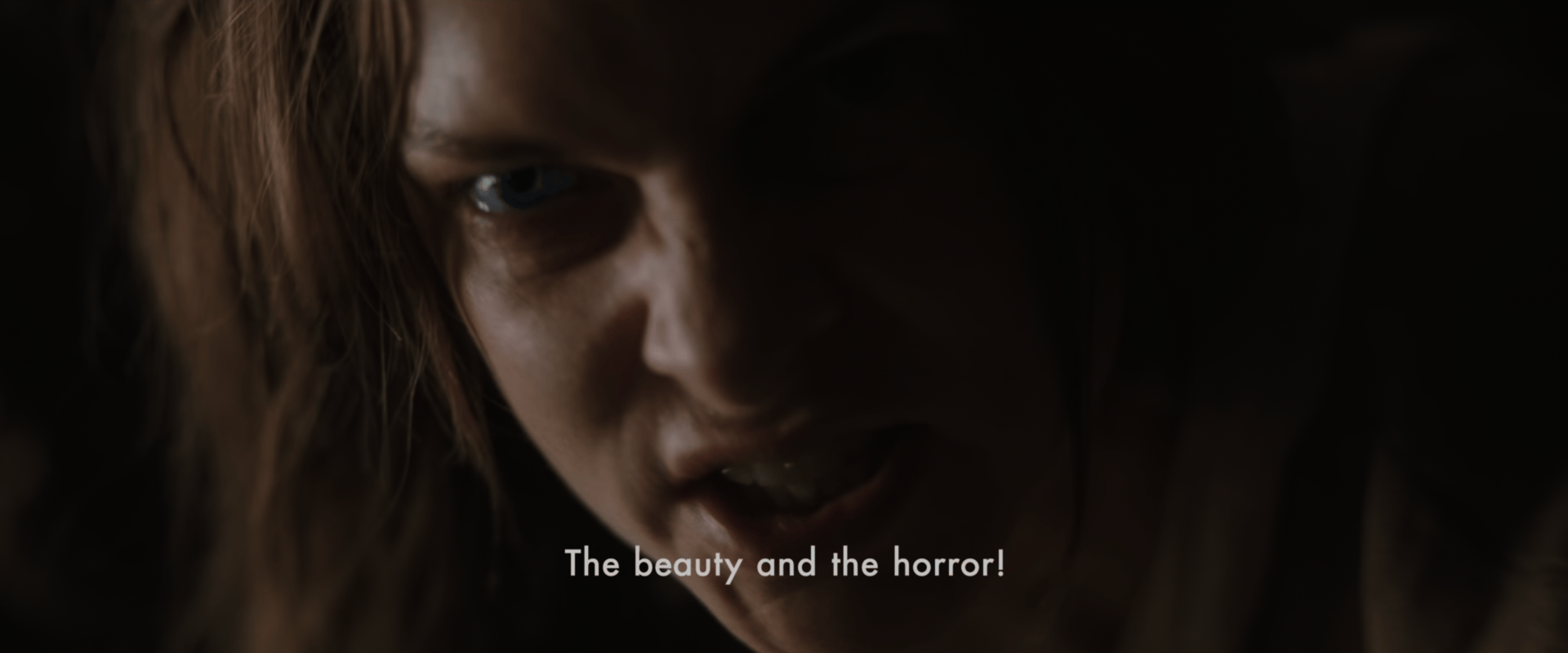
Great story. A work of art. Rightfully still #1 best Science Fiction of all time.
They say “ignorance is bliss”. Now I know what that means on a visceral level.
I have seen the beauty and the horror. I have climbed the mental mountain tops and I have walked through my own valleys of the shadow of death.
☠
“We are theorists, we imagine a future, and our imaginings horrify us”
-Oppenheimer
I am a theorist. I am imagining a future and a specific way to build a new type of organisational technology. The potential that this technology could be misused, as all technology will be since we humans are flawed beings, has horrified me.
The most famous quote from Oppenheimer must be the one where he reads from the Bhagavad Gita11 as he witnesses the first nuclear detonation:
“And now I have become Death, destroyer of worlds”
Creation and Destruction go hand in hand. Powerful ideas can build worlds but can just as easily unmake old structures — beliefs, systems, paradigms.
I would not embark on this journey If I was not convinced that the potential for channeling the good dramatically outweighs the potential for evil. In fact this project and the technology that I want to imagine with and for you is intended to empower the Good.
So that in the future, having succesfully built it we can say:
“And now we have become Life, builders of worlds”.

🌞➳🌈🌼🌸 The future is bright.
Each challenge is also an opportunity. The Metacrises that we are in forces us to get our act together. We will get our act together, as failure is not a viable option.
I feel I have reached a critical minimum viable amount of understanding of this idea and the field(s) in which I want to plant it to attempt to communicate it to you. Since we are talking about the most challenging problem(s) that we as humanity have, basically charting a way to solve the metacrisis that we are in, this will not be easy to explain nor easy to execute.
But it is the most worthwhile, meaningful, intense and also fun thing I can think of, nothing compares. This is the life mission that has chosen me and that I have chosen, I have tried walking away from it but my mind always returns to it so might as well give it a shot. I will stop running away from my fate. Maybe this is what you have been waiting for too, dear reader. A chance to be a hero and a pioneer. An opportunity to win glory and respect in the eyes of your peers and all future generations.
A chance to find your peers, to work with likeminded people who truly care about the greater Good. Who recognise the bigger picture and the chance to write history via a truly worthwile mission, a mission that is bigger than any one of us.
A great task and destiny in which we can unite.
An attempt to throw the spear of mankind beyond the lifetime of a mere domestic ape, beyond the human as he finds himself.
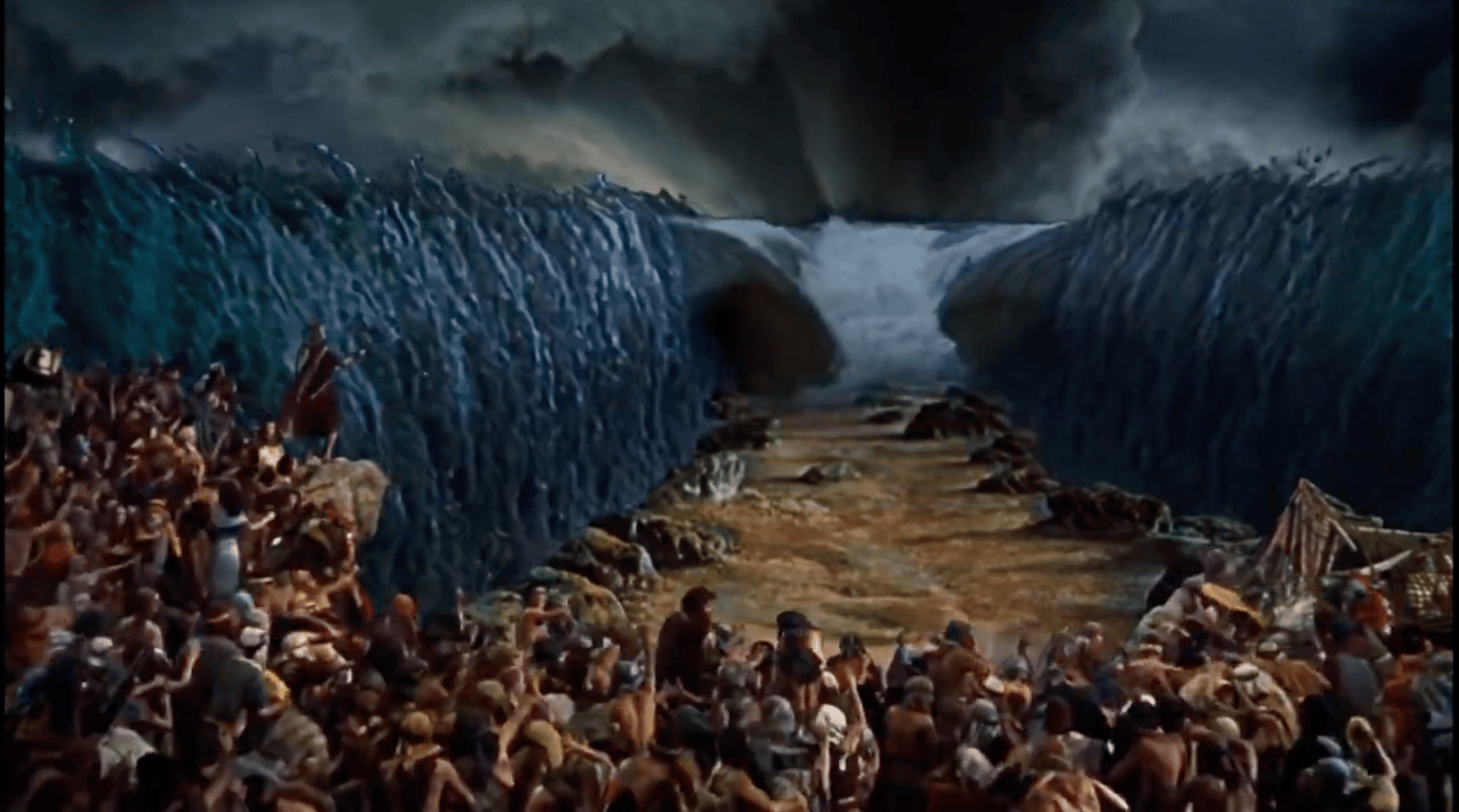
“The Unification of the science of knowledge, philosophy and religion“
-Moses Hess, Rome and Jerusalem - The last national question
(1862)
It will require a nonlinear approach, and it will require a lot of time and attention. It will require embracing pragmatic idealism. We will spend time in the ivory tower of grand theory, narratives and idealism, looking at the big picture, and we will get down from it into the maddening and invigorating complexity of dealing with the real and how to make things happen in this beautiful and horrifying world of ours that we inhabit, with all its seeming contradictions and paradoxes, with the puzzling complexity that are human beings and their desires and motives.
And though it is true in a sense that אֵין חָדָשׁ תַּחַת הַשָּׁמֶש (קהלתאט), there is nothing new under the sun (Ecclesiastes 1:9), I am confident that a new combination of what already exists out there will lead to good things. Especially the aforementioned unification of the science of knowledge, philosophy and religion, already envisioned by Moses Hess in 1862 might allow us to overcome the collective mental state of schizophrenia that this threefold separation has forced all our minds into.
So that by the end Murphy will be able to say:
“Eureka, this has been correctly assembled and is ready for the Gods to inhabit”
-Justin Murphy, Software as Soulcraft and the Metaphysics of Engineering with Neal Davis
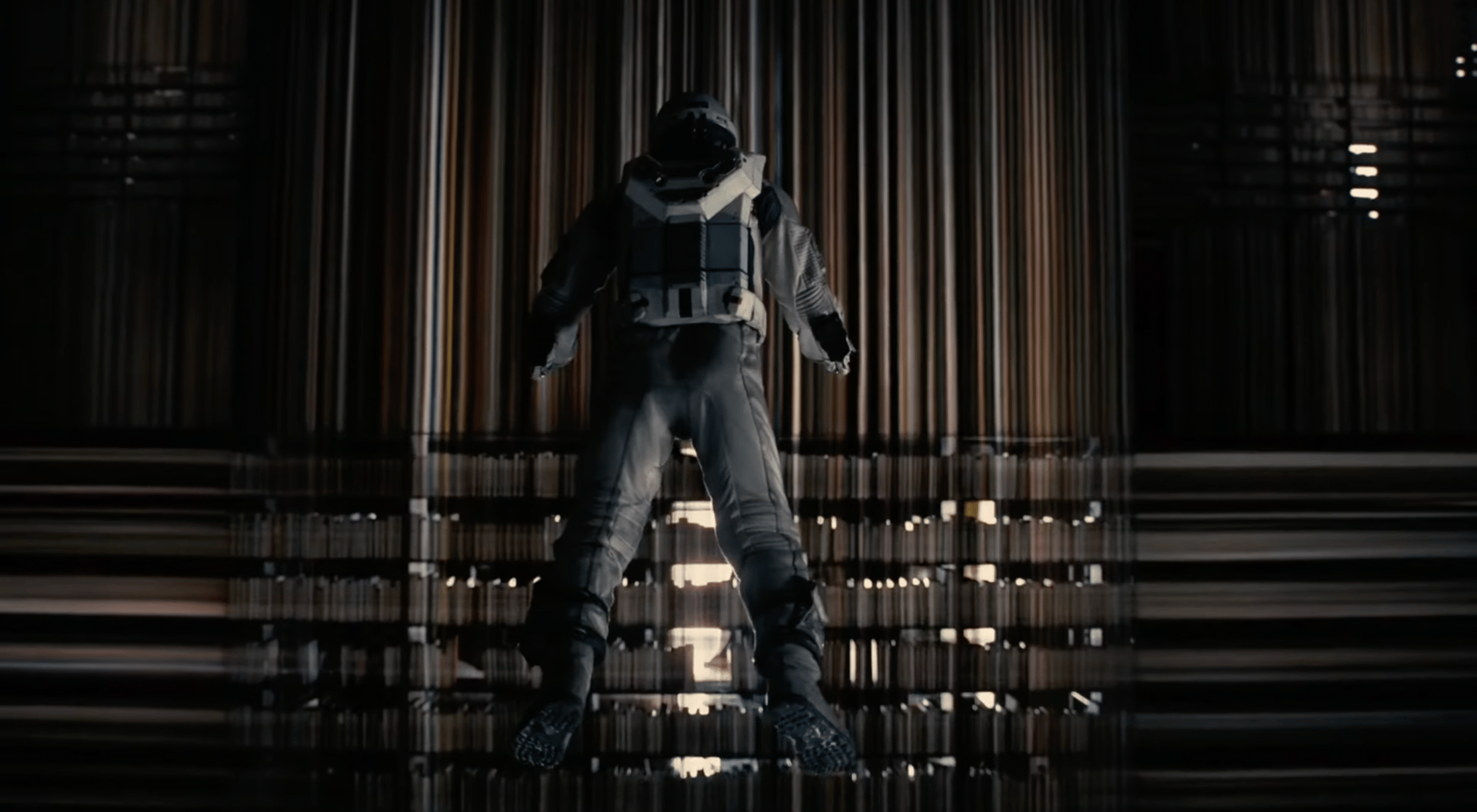
The “ghost” (🝇) In the Tesseract
I will leave you with three more quotes, to send a message:
“Love is the one thing we are capable of perceiving that transcends time and space. Maybe we should trust that even if we can’t understand it yet”
- Emilia Brand, Interstellar
When you get to the heart of the matter, all of this is a labor of love.
“For he who has a why can bear any how”
- Friedrich Nietzsche, Twilight of the Idols, Maxims and Arrows, aphorism 12. (1889).
Why embark on this project? Out of love for humanity. I believe in us and the power of our noosphere12 . I believe we will get out of the metacrisis, we will solve our problems, I believe in a future that is so much better than anything that any of us can imagine now. I believe we have it in us to successfully pass the Great Filter. If we play our collective cards right. It is up to us to do so.
“We are within reach not just of marginal goals set at the competitive edge of todays conventional disciplines, but of ambition so great that even the boldest minds of the scientific revolution hesitated to announce them directly.”
- Peter Thiel, Zero to One
Words to contemplate.

🌈 ➳ 🦋
1 -Dune p. 251 by Frank Herbert, SF Masterworks edition
2 Dune, p. 1 by Frank Herbert, SF Masterworks edition
3 Alexander Caedmon Karp, The Technological Republic
4 Dune, p. 254 by Frank Herbert, SF Masterworks edition
5 Alexander Caedmon Karp, The Technological Republic
6 “Bila kayf” (بِلا كَيْف), literally “without [asking] how,” is a classical Islamic theological principle used to affirm that God acts and possesses attributes in ways whose modality is beyond human comprehension. It expresses intellectual humility: divine realities are accepted as true without speculating about their mechanism or “how-ness.”
7 Perennialism is the view that all major religious and mystical traditions share a single, underlying metaphysical truth—often called the “perennial philosophy”—even though they express it through different symbols, stories, and doctrines. According to this perspective, the world’s traditions are diverse surface expressions of a universal inner reality: an ultimate ground of being, a transcendent unity, or a shared experiential core accessible through contemplation, moral refinement, or spiritual practice. Perennialists argue that sages across cultures point to the same fundamental insights about the nature of the self, the cosmos, and the divine, and that historical differences reflect context rather than contradiction. Critics counter that this can oversimplify traditions, but its appeal lies in offering a unifying framework that sees wisdom as universal rather than exclusive.
8 神 is a multifaceted character meaning “spirit,” “divine being,” or “sacred presence,” and its significance shifts subtly across cultures. In Japanese Shinto, 神 (kami) refers to immanent sacred forces found in nature, ancestors, and mythic figures—beings or phenomena that evoke awe rather than omnipotent gods. In Chinese, 神 (shén) similarly denotes spirits, deities, or numinous qualities, and extends metaphorically to “mind,” “vitality,” or the animating spirit of a person. The character combines the radical for “altar” or “ritual” (礻) with a phonetic component (申), encoding the idea of an invoked or manifested sacred power. Across East Asian traditions, 神 points to the presence of the extraordinary within the ordinary—the numinous power that animates, protects, or inspires.
9 The Tao Te Ching teaches that lasting strength and clarity come from aligning oneself with the Tao—the effortless, underlying flow of reality—rather than forcing outcomes through ego or control. Its core lessons emphasize simplicity, humility, flexibility, and non-striving (wu wei), urging readers to act in harmony with the natural order instead of pushing against it. By valuing softness over rigidity, emptiness over accumulation, and quiet perception over noisy assertion, the text offers a counterintuitive wisdom: true power lies in yielding, true influence in restraint, and true understanding in letting things reveal themselves rather than imposing one’s will.
10 As evidenced by my footnoting :-)
11 The Bhagavad Gita is a philosophical dialogue between the warrior Arjuna and the god Krishna, unfolding on a battlefield where Arjuna is paralyzed by moral doubt about fighting in a civil war. Krishna teaches him to see action through a deeper lens: one must fulfill one’s duty (dharma) without attachment to personal gain, dedicating action to the divine rather than the ego. The Gita synthesizes India’s major spiritual paths—disciplined action (karma yoga), devotion (bhakti), and contemplative insight (jnana)—into a single vision of inner freedom. Its core message is that clarity, courage, and serenity arise when one acts from alignment with the eternal Self rather than fear, desire, or confusion.
12 The noosphere is the concept that human thought forms a distinct, evolving layer of reality—one that emerges from but ultimately transcends biological life and the physical environment. Coined by Vladimir Vernadsky and popularized by Pierre Teilhard de Chardin, it describes a sphere of collective consciousness in which ideas, culture, knowledge, and shared meaning interact like an interconnected ecosystem. As humanity communicates, innovates, and reflects, the noosphere grows in complexity and, in Teilhard’s view, moves toward greater unification and coherence. In modern terms, it anticipates the internet, global information networks, and the intensifying interdependence of human minds.
13 Telos is a Greek term meaning “end,” “purpose,” or “ultimate aim,” and it sits at the center of Aristotle’s philosophy. For Aristotle, everything in nature has a telos—a built-in direction or fulfillment toward which it naturally strives, whether that’s an acorn becoming an oak or a human seeking flourishing (eudaimonia). Telos gives actions, systems, and beings their meaning: to understand something fully, you must know not only what it is made of or how it works, but what it is for. In modern thought, the idea remains powerful because it frames human life, ethics, institutions, and even technologies in terms of purpose rather than mere mechanics, pushing us to ask what the highest or most coherent end of any undertaking should be.